

Packaging machines need stable, accurate, and continuous motion. Whether the machine is used for conveying, filling, sealing, labeling, wrapping, or cartoning, the gear motor plays a very important role in keeping the production line running smoothly.
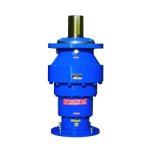
A planetary gear motor for a packaging machine is one of the most common and practical drive solutions. It offers stable speed, reliable torque, compact structure, and relatively low noise, which makes it suitable for many industrial packaging applications.
However, choosing the right packaging machine gear motor is not only about motor power. You also need to consider output speed, torque, gear ratio, mounting position, voltage, duty cycle, load type, and working environment.
This guide will help you understand how to select a suitable Planetary geared motor for a packaging machine, especially from a practical B2B purchasing and engineering point of view.
A Planetary gear motor is a drive unit that combines an electric motor and a Planetary gearbox. The motor provides rotary power, while the gearbox reduces speed and increases torque.
A typical Planetary geared motor includes:
In packaging machines, three-phase motors are more commonly used for industrial production lines. They are usually paired with Planetary gearboxes to provide stable and continuous output.
Packaging machines usually work for long hours. In many factories, the packaging line runs continuously for one or two shifts every day. Some production lines even operate 24 hours a day.
If the gear motor fails, the whole packaging line may stop. This can cause production delays, labor waste, rejected products, and extra maintenance costs.
A reliable industrial gear motor can help packaging machines achieve:
For packaging machine builders, the gear motor also affects the quality and reputation of the complete equipment. A low-quality motor or gearbox may reduce the total cost at the beginning, but it can create many after-sales problems later.
A Planetary gear motor for a packaging machine can be used in many parts of a packaging production line.
Conveyors are one of the most common applications. A gear motor for conveyor drives the belt, roller, or chain to move products from one station to another.
Typical conveyor applications include:
For conveyors, the most important selection points are output speed, torque, load weight, belt width, and working hours.
Filling machines are used for liquid, powder, granule, or paste products. Gear motors may drive turntables, conveyors, lifting systems, or screw feeding parts.
In this application, smooth motion and stable speed are important because they affect filling accuracy and production efficiency.
Sealing machines need reliable movement to press, heat, seal, or transfer products. The gear motor should provide stable torque and avoid sudden speed changes.
For continuous sealing machines, the motor and gearbox should be suitable for long-term operation.
Labeling machines require accurate product movement. If the conveyor speed is unstable, the label may not be applied correctly.
A suitable Planetary geared motor can help maintain stable product flow and improve labeling accuracy.
Cartoning machines are used to open, fill, fold, and close cartons. Several gear motors may be used in one machine to drive different mechanical parts.
For this type of equipment, machine builders usually care about motor reliability, compact size, and easy installation.
Wrapping machines often require synchronized motion between conveyors, rollers, and film feeding systems. Gear motors used here should provide smooth transmission and stable torque.
For higher-end packaging machines, the gear motor may also work together with a frequency inverter to adjust speed.
Choosing a packaging machine gear motor should be based on real working conditions. Below are the most important factors.
Motor power is usually selected according to the load and application. Common power ranges for packaging machines include:
Small packaging conveyors may only need 0.18 kW or 0.37 kW. Larger or heavier machines may require 1.5 kW, 2.2 kW, or higher.
But power alone is not enough. You also need to check output torque and speed.
Output speed means the final speed after gearbox reduction. For packaging conveyors, common output speeds may range from 10 rpm to 300 rpm, depending on belt size and required line speed.
Torque is one of the most important factors. If the torque is too low, the gear motor may overload, heat up, or fail to start under load.
The required torque depends on:
For packaging machines with frequent start-stop operation, it is better to choose a gear motor with enough torque margin.
Gear ratio determines how much the gearbox reduces speed and increases torque.
For example, if a 4-pole motor runs at around 1450 rpm at 50 Hz and the gearbox ratio is 20:1, the output speed will be around 72.5 rpm.
Formula:
Output speed = Motor speed ÷ Gear ratio
If you know the required output speed, you can calculate the suitable gear ratio.
Packaging machines may use different mounting methods depending on the equipment structure.
Common mounting types include:
Before ordering, it is important to confirm the installation dimensions, shaft direction, output shaft size, and mounting position.
For a packaging conveyor, the gear motor selection should start from the conveyor data.
You need to know:
Then you can calculate or estimate the required output speed and torque.
For example, if the conveyor needs low speed but high pulling force, you should choose a larger gear ratio and enough output torque. If the conveyor needs faster speed and a light load, a smaller gear ratio may be enough.
For B2B buyers, if you do not have complete calculation data, you can provide the supplier with machine photos, nameplate photos, the old motor model, gearbox model, and a working video. An experienced supplier can help recommend a suitable replacement.
Many purchasing problems happen because important details are not confirmed at the beginning.
Common mistakes include:
For packaging machines, small dimensional differences may affect installation. Therefore, before mass orders, it is better to confirm drawings, dimensions, and technical specifications.
Use our gearbox calculator to find the right kind of planetary geared motor technical specifications.
Regular maintenance can extend the service life of a Planetary gearbox motor .
Important maintenance points include:
For packaging factories, preventive maintenance is better than emergency repair. A small issue such as oil leakage or abnormal noise should be handled early.
For packaging machine manufacturers, distributors, and OEM buyers, choosing the right gear motor supplier is not only about price. Reliability, technical support, customization ability, and stable delivery are also important.
Precision can support B2B customers with practical solutions for motors and gearboxes.
Our advantages include:
A Planetary gear motor for packaging machines is a practical and reliable drive solution for conveyors, filling machines, sealing machines, labeling machines, cartoning machines, and wrapping equipment.
To choose the right model, you should not only look at motor power. Output speed, torque, gear ratio, mounting type, voltage, duty cycle, and working environment are all important.
For packaging machine builders and industrial buyers, a correctly selected packaging machine gear motor can improve machine stability, reduce maintenance, and support long-term production efficiency.
Precision Gear Transmissions can provide reliable Planetary geared motor solutions for packaging machines and other industrial equipment. If you need a standard model, customized specification, or replacement for an existing gear motor, you can send us your technical details, drawings, or nameplate photos. Our team will help you choose a suitable solution for your application.
WhatsApp us